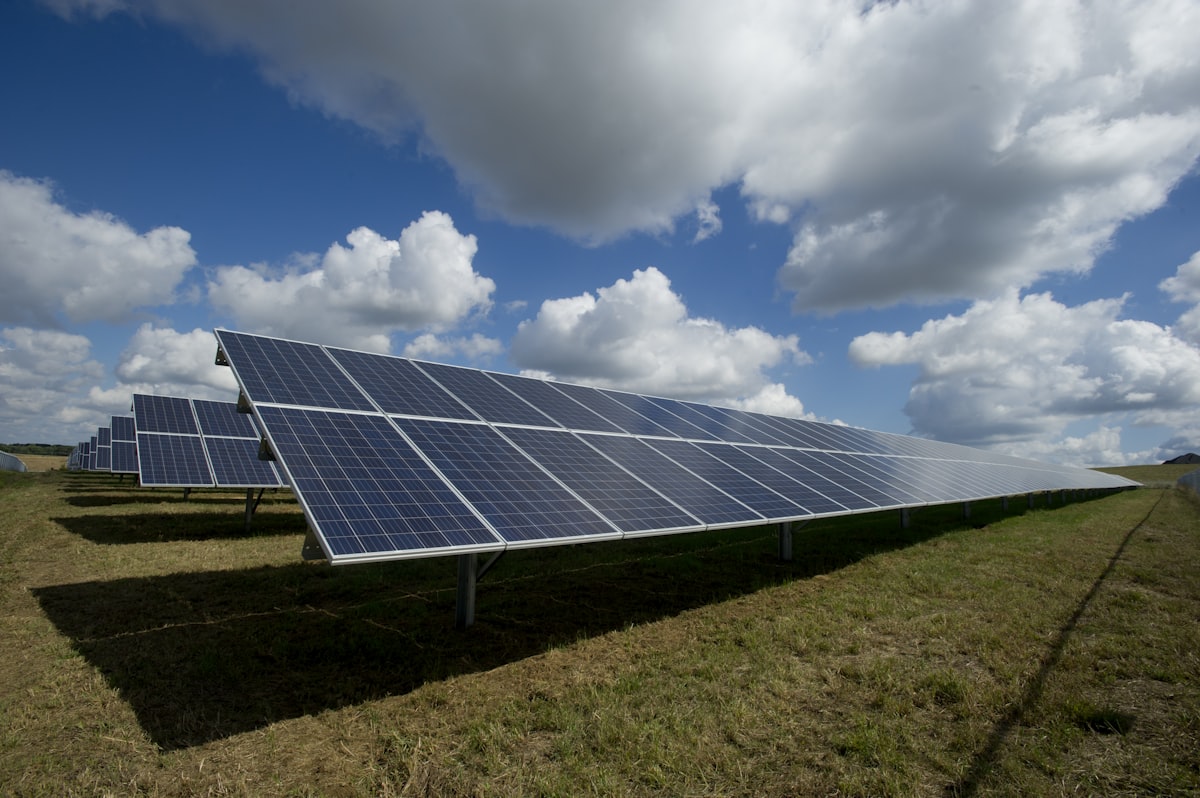
Buy Bright Saver if low weight, a small cash commitment, and easy removal matter most. Buy PluggedSolar if you have room for rigid panels and want more than a 360W output ceiling. The cheap Bright Saver member price makes its two-panel kit the price-per-watt winner, but PluggedSolar can produce much more electricity from one expandable 120V system.
Compare both system sizes using your state's electricity price and realistic sun hours.
Calculate balcony solar payback →This comparison covers Bright Saver’s 180W and 360W Flex kits and PluggedSolar’s small 120V, 800W-inverter product line. PluggedSolar also sells much larger 240V grid-tie systems. Those are a different installation category and are not part of this comparison.
The decision in one table
| Bright Saver Flex | PluggedSolar 120V kit | |
|---|---|---|
| Available panel configurations | 180W or 360W | 200W to 800W |
| Starting hardware price | $499 retail for one 180W panel | About $699 for 200W |
| Member price | $285.30 for 180W; $414.17 for 360W | No membership |
| Membership | $29 per year | None |
| First-year entry cost | $314.30 for 180W; $443.17 for 360W | About $699 |
| Maximum compared configuration | 360W | 800W |
| Panel type | Flexible, 11 lb each | Rigid monocrystalline |
| Inverter | 120V microinverter | 120V 800W microinverter |
| Certification statement | Whole-system listing is not clearly published | Vendor claims inverter is UL 1741 compliant |
| Shipping | Contiguous US except ME, NY, VT | Vendor says US-wide; verify destination |
| Timing | Preorder, late August 2026 inventory | Listed for sale now |
Prices and availability were checked July 18, 2026. Bright Saver publishes its Flex kit contents and shipping limits and its at-cost membership pricing. PluggedSolar lists each 120V kit configuration and included equipment.
Bright Saver has the better entry math
The $499 retail price is not the sensible way to buy Bright Saver. A $29 annual membership reduces the hardware price enough to pay for itself immediately.
Here is the first-year price per rated watt:
| Configuration | Explicit math | First-year cost per watt |
|---|---|---|
| Bright Saver 180W retail | $499 / 180W | $2.77/W |
| Bright Saver 180W member | ($285.30 + $29) / 180W | $1.75/W |
| Bright Saver 360W member | ($414.17 + $29) / 360W | $1.23/W |
| PluggedSolar 200W starter | $699 / 200W | $3.50/W |
| PluggedSolar 800W, no mount | $1,449 / 800W | $1.81/W |
That makes Bright Saver’s 360W member kit the clear value choice per nameplate watt. The result changes if you keep paying membership after the first year without using its other benefits, so canceling or renewing is a separate decision from owning the hardware.
Price per watt is not annual savings. A shaded 360W panel can produce less than a well-placed 200W array. Use the balcony solar sizing guide before treating nameplate power as expected output.
PluggedSolar wins when output matters
Bright Saver stops at two 180W panels, or 360W total. PluggedSolar pairs an 800W microinverter with configurations from two 100W panels through four 200W panels. Its listing includes a 50-foot 120V cord and Wi-Fi power monitor. Mounting changes the purchase price.
For a simple production comparison, assume:
- 3.5 equivalent full-sun hours per day
- 80% delivered energy after heat, angle, inverter, and wiring losses
- No shade
The math is:
360W x 3.5 hours x 0.80 = 1.01 kWh/day
800W x 3.5 hours x 0.80 = 2.24 kWh/day
At $0.25/kWh, if every generated kWh offsets utility purchases, that is about $92 per year for 360W and $204 per year for 800W. This is an assumption, not a billing-engine result. Exported electricity may be worth much less than retail, and winter production can be lower.
If your home routinely uses 300W to 700W during sunny hours, PluggedSolar has room to offset more of that load. If your daytime base load is only a refrigerator, router, and laptop, Bright Saver’s lower ceiling may be enough.
Buyers who prefer to source panels separately should also compare HiFlow Pro vs APsystems EZ1. If 800W still is not enough, the Craftstrom vs Mango Power comparison covers heavier 1,200W systems with export controls.
Portability is Bright Saver’s real advantage
Each Bright Saver panel weighs 11 pounds and measures 46 by 34 inches. One person can move a panel, store it between leases, or hang it on a fence that cannot take a heavy framed module. That matters more than a polished app for many renters.
PluggedSolar’s rigid panels need more surface area and a proper ground or roof mount. The 800W option uses four panels. It is still DIY hardware, but it is not something most renters will pack away casually.
For mounting and wind questions, read the fence-line solar mounting guide. Renters should also check the HOA and landlord rules before ordering either product.
Treat the safety claims precisely
PluggedSolar says its 800W microinverter is UL 1741 compliant for anti-islanding. That is useful, but it is not the same claim as a complete kit listed to UL 3700. Ask for the certificate and match its exact model number to the inverter label. The UL 3700 explainer covers that distinction.
Bright Saver excludes Maine, New York, and Vermont because those states require complete-system certification. Its product page does not clearly publish a complete-system listing for the current kit. Do not infer one from a component description.
Shipping also does not prove legal use. Check your state’s live watt cap, utility notice rules, outlet requirements, and landlord terms before plugging in.
Buyer matrix
| Buyer | Better pick | Why |
|---|---|---|
| Renter moving within two years | Bright Saver 180W | Lowest weight and easiest removal |
| Budget below $500 | Bright Saver 360W member kit | Best first-year price per watt |
| Tiny balcony or fence section | Bright Saver 180W | One compact flexible panel |
| Home with 400W+ daytime load | PluggedSolar 600W or 800W | Higher useful output ceiling |
| Patio with room for four rigid panels | PluggedSolar 800W | More annual production potential |
| Buyer in ME, NY, or VT | Neither without further verification | Bright Saver excludes these states; listing and legal rules need checking |
| Evening-heavy home with low export credit | Model storage separately | Read battery vs no battery before adding cost |
Bright Saver is the more approachable starter. PluggedSolar is the more capable small array. Do not pay $499 retail for one Bright Saver panel when the $29 membership opens the much lower at-cost price. Do not buy four rigid PluggedSolar panels if your balcony cannot safely mount them or your daytime load cannot consume their output.
For a deeper look at Bright Saver’s organization and kit details, see the separate Bright Saver review. This comparison is about dollars per watt, portability, and output, not a repeat of that review.
Put your state, system size, utility rate, and self-consumption assumptions into one comparison.
Compare Bright Saver and PluggedSolar →Related: Best Balcony Solar Kits 2026 | Balcony Solar Battery vs No Battery | Power Stations vs Plug-In Solar

Dana Whitmore
Energy Engineer & Billing Analyst · Optiwatt Energy Advisor
Dana has spent the past three years analyzing residential electricity billing data across PG&E, SCE, and SDG&E service territories. She's reviewed billing records for thousands of California households, and built the simulation engine that powers this site's rate-plan comparisons. She holds a degree in Electrical Engineering and lives in the Bay Area.