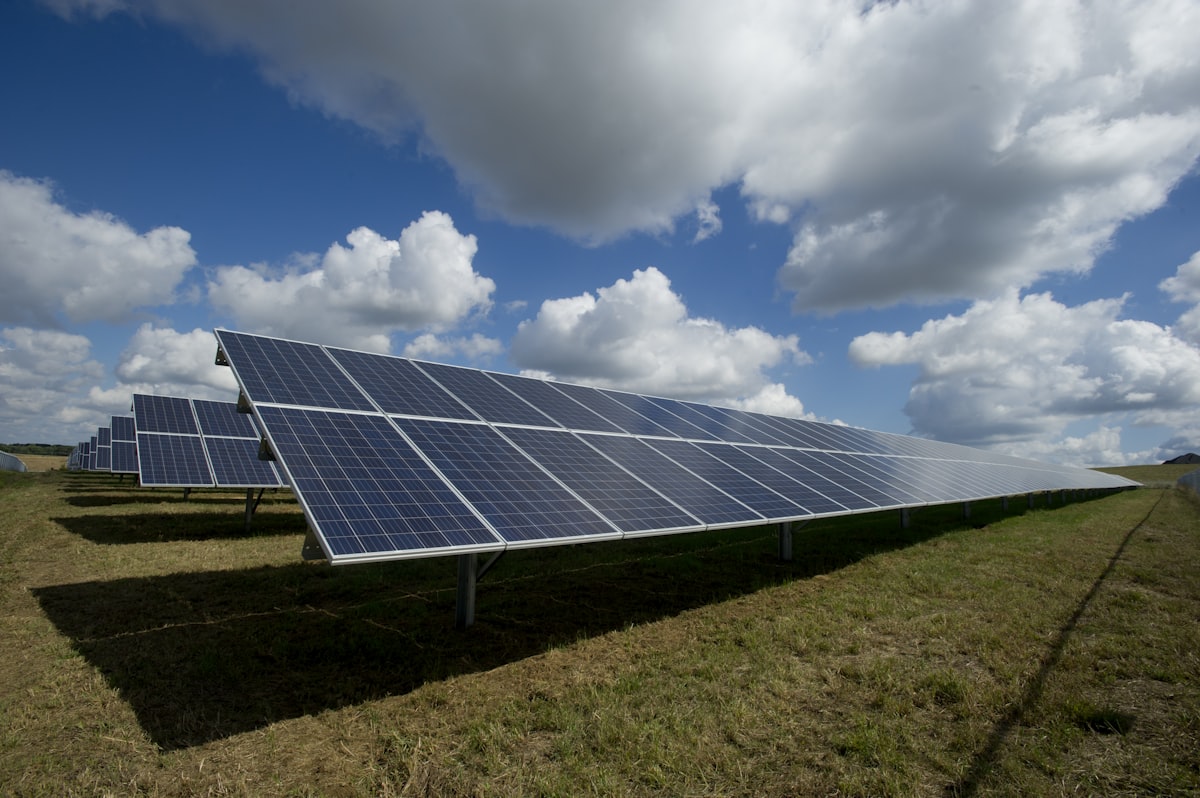
Verdict: Mango Power S is the better buy for most 1,200W shoppers. On July 18, 2026, Mango’s zero-export bundle listed at $2,698 with the Smart Gateway Lite included, about $350 below Craftstrom’s $3,048 kit. Choose Craftstrom when included mounting and its vendor-claimed all-50-state availability solve a real problem for you. Do not pay the premium because either company says zero export makes the system permission-free.
Compare both 1,200W kits using your state, electricity rate, sun hours, and expected daytime use.
Compare 1,200W solar payback →These are catalog prices, not promises. Both vendors run promotions and change bundles. On July 18, the live pages showed different checkout figures from our July 16 snapshot. Confirm the cart total and included hardware before paying.
The price gap is real, but not complete
| Craftstrom 1200W Plug&Play | Mango Power S 1200W | |
|---|---|---|
| Live checkout price, July 18, 2026 | $3,048 | $2,698 zero-export bundle |
| Rated kit size | 1,200W | 1,200W |
| Panels | Six 200W bifacial panels | Four 300W panels |
| Microinverter setup | Three smart inverters | Four module-level inverters |
| Mounting | Included | Vendor page references a stand; confirm fit |
| Export control | Smart PowerMeter included | Smart Gateway Lite included in current bundle |
| Published component claims | ETL/UL inverter, IEEE 1547 marketing | UL 1741-SA/SB, IEEE 1547:2018, CA Rule 21 claims |
| Vendor shipping position | ”Available in all 50 states” | Lower 48 shipping |
| Plug-in path stated by vendor | Broad zero-export pitch | Utah PnP; local compliance elsewhere |
| Best fit | Buyer who values mounting and broad vendor support | Buyer focused on price and module-level hardware |
Still, Mango starts with enough room to absorb typical mounting costs. Our equipment catalog estimates railing hardware at $20 to $120, ballast at $40 to $200, and CT installation labor at $150 to $400. Even adding $120 of mounts and $250 of CT labor puts the $2,698 Mango bundle at $3,068, roughly even with Craftstrom before freight differences.
For export-control details, see zero-export meters for balcony solar. For starter kits under $1,000, see Bright Saver vs PluggedSolar.
Craftstrom is the more complete physical kit
Craftstrom’s official 1,200W product page lists six 200W bifacial panels, mounting, three smart inverters, a Smart PowerMeter, connector cables, an AC cable, and app monitoring. That is a practical package for a buyer who does not want to source brackets separately.
Its homepage claims availability in all 50 states. Treat that as a vendor availability claim, not a legal finding. Craftstrom’s own safety and legality page says legality depends on where you live and how the system is designed.
There are two reasons I would hesitate:
- The legal copy overreaches. The product page says its PowerMeter prevents public-grid backfeed and therefore avoids utility permissions. That conclusion does not hold everywhere. A utility can regulate parallel generation even when export is limited to zero.
- Bifacial marketing needs a reality check. Vertical railing mounts with a wall behind the panels rarely deliver the “up to 30% more” bifacial gain shown in ideal ground installations.
Craftstrom is still a credible contender when its mounting fits your site. Price the exact cart, ask for the exact ETL or NRTL listing documents, and send the one-line diagram to your authority having jurisdiction if local rules require review.
Mango wins on value and clearer geographic limits
The Mango Power S product page lists 1,200W of panels, microinverters, stand or bundle hardware, cables, app monitoring, and a Smart Gateway Lite in the current zero-export bundle. It claims UL 1741-SA/SB, IEEE 1547:2018, CA Rule 21, 97% CEC efficiency, and a 25-year warranty.
Outside Utah, Mango’s Smart Gateway Lite page says the gateway is required for Mango Power S plug-in PV systems, subject to local grid interconnection approval. The July 18 checkout bundle included the gateway at $2,698. If you see a lower kit-only price, confirm whether the gateway is still in the cart. Standalone, the gateway listed at $129.
The main weakness is mounting ambiguity. Our catalog says mounting is not included, while the current vendor page references a stand. Get written confirmation that the hardware fits your site.
Zero export is control, not permission
Both systems measure house load and reduce solar output when generation would otherwise flow to the grid. That is useful engineering. It can also be required by an approved interconnection design.
It does not automatically waive:
- Utility interconnection or permission to operate
- Electrical permits or inspections
- State plug-in solar limits
- Local building and fire rules
- Landlord or HOA restrictions
- Requirements for a dedicated circuit, outdoor GFCI, or listed bidirectional receptacle
Utah’s HB 340 created a specific legal path for qualifying systems up to 1,200W. Other states use different limits and effective dates. Check our state law tracker before treating a shipping confirmation as installation approval.
This also applies to component certification. A microinverter’s UL 1741 claim is not the same as a complete system being certified under UL 3700. Our UL 3700 guide explains the distinction. The new component choices in HiFlow Pro vs APsystems EZ1 show how quickly this market is changing.
My payback assumptions
Here is the exact conservative case I use to compare the two kits:
- 1,200W DC panel rating
- 4.0 peak-sun-hours per day
- 80% production factor for temperature, orientation, conversion, and downtime
- 70% of generated energy consumed in the home
- $0.25/kWh retail electricity price
- $0/kWh value assigned to exported energy
- No battery
- No federal residential solar tax credit for a 2026 purchase
- Hardware price only, before tax and electrical work
Annual generation is 1.2kW x 4.0 hours x 365 x 80% = 1,402 kWh. At 70% self-consumption, 981 kWh offsets the bill. At $0.25/kWh, that is about $245 per year.
Using the July 18 checkout prices alone:
- Mango Power: $2,698 / $245 = 11.0 years
- Craftstrom: $3,048 / $245 = 12.4 years
That is a long payback for both. At $0.35/kWh, annual savings rise to about $343, cutting simple payback to 7.9 years for Mango and 8.9 years for Craftstrom. A $400 electrician visit adds another 1.2 years at the higher rate.
PluggedSolar’s 800W kit, advertised near $699 for the smallest 120V configuration, is a budget contrast, not an equal substitute. Our catalog found no clear UL 3700 whole-system listing. See Bright Saver vs PluggedSolar for that under-$1,000 decision.
Which kit fits which buyer?
| Buyer | Pick | Reason |
|---|---|---|
| Utah buyer seeking lowest 1,200W checkout price | Mango Power S | Lower live price and explicit Utah PnP positioning |
| Buyer outside Utah with approved zero-export design | Mango Power S | Gateway path is documented, but approval still comes first |
| Buyer who needs mounting in one shipment | Craftstrom | Kit includes mounting |
| Alaska or Hawaii shopper | Craftstrom, verify freight | Mango is listed for the lower 48 |
| Buyer with a hostile utility or unclear local code | Neither yet | Zero export does not settle legality |
| High-rate home with strong daytime load | Mango Power S | Faster payback from the lower starting price |
| Lowest possible DIY budget | Research PluggedSolar | Cheaper, but not equivalent in certification or controls |
| Buyer who wants the fewest launch-price surprises | Neither without a written quote | Both live prices and bundles have moved |
My final choice is Mango Power S after confirming the gateway and mounting contents in writing. Craftstrom earns its premium only when the included mounting is genuinely usable or Mango will not ship to your state. In every other case, keep the $350 difference and put it toward compliant outlet work, a dedicated circuit, or better panel placement.
Use current checkout prices and your real daytime usage to see whether either kit earns back its cost.
Run my balcony solar numbers →Related: HiFlow Pro vs APsystems EZ1 | Zero-Export Meters for Balcony Solar | Bright Saver vs PluggedSolar | Best Balcony Solar Kits

Dana Whitmore
Energy Engineer & Billing Analyst · Optiwatt Energy Advisor
Dana has spent the past three years analyzing residential electricity billing data across PG&E, SCE, and SDG&E service territories. She's reviewed billing records for thousands of California households, and built the simulation engine that powers this site's rate-plan comparisons. She holds a degree in Electrical Engineering and lives in the Bay Area.