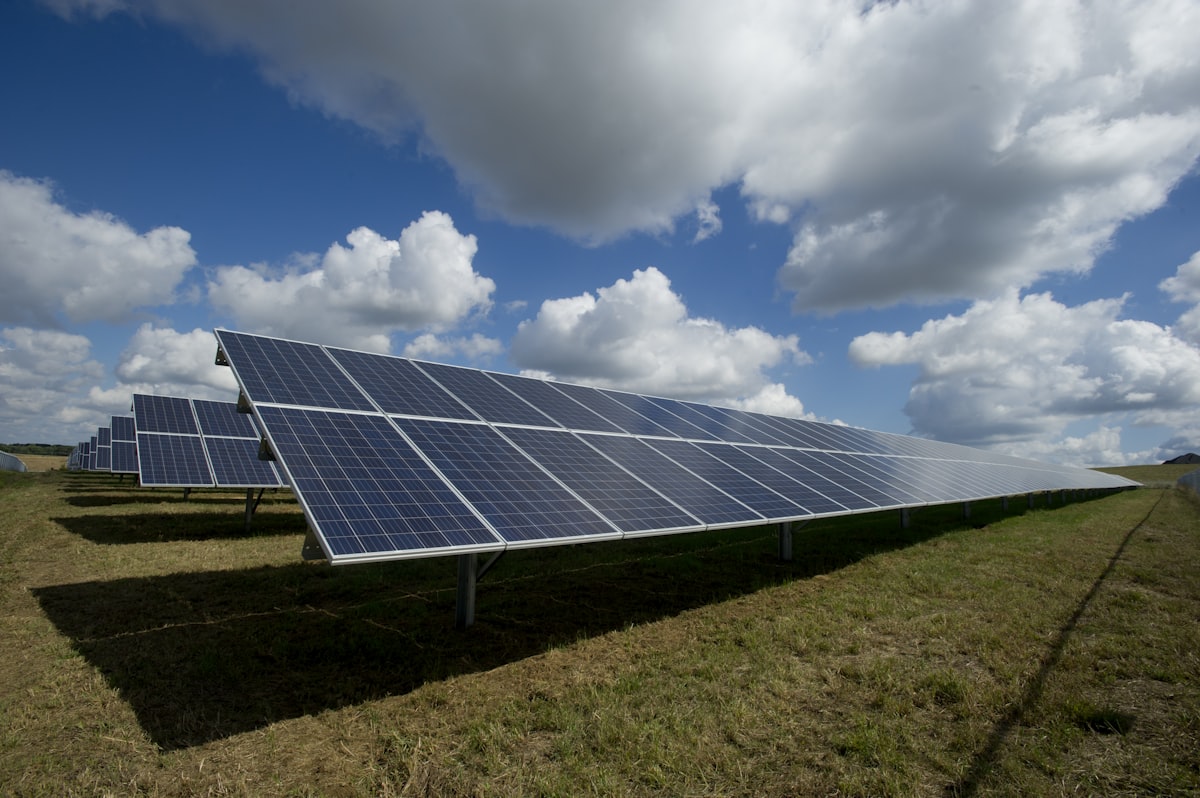
Plug-in balcony solar went from legal curiosity to statehouse priority in about 18 months. Utah passed the first dedicated law in March 2025. Seven states have enacted versions as of June 2026. More than 30 others have active bills. The US still has only a few thousand installed systems. Germany has over a million. The gap is regulatory, not technical.
Start with your state and usage. Our calculator estimates annual savings and payback for real 2026 kits.
Balcony solar calculator →What balcony solar actually is
Balcony solar (plug-in solar, micro solar, PIPV) means one to four panels (200W–1,200W total) paired with a microinverter that outputs 120V AC into a standard wall outlet. You mount panels on a railing, patio, fence, or ground stand. No roofer. No utility interconnection agreement in states with enabling legislation.
The system acts as a load reducer, not a backup generator. It offsets what your home draws from the grid in real time: fridge, router, TV, chargers. Typical 800W setup offsets 10–30% of apartment usage, not the whole bill.
Advanced setups add a smart power meter at the breaker (zero-export: no power flows back to the grid) or a 1–2 kWh battery to store midday surplus for evening use. Self-consumption rate drives the economics more than panel wattage.
Where it’s legal in 2026
| Status | States |
|---|---|
| Enacted | Utah, Maine, Virginia, Colorado, Maryland, Connecticut, New Hampshire |
| Awaiting signature | New York (SUNNY Act), Vermont |
| Pending in legislature | California (SB 868), New Jersey, Ohio, Oklahoma, and 25+ others |
Full details: plug-in solar law tracker. State-specific writeups: Utah, Virginia, California SB 868 status, New York.
Most enacted laws share the same shape: ≤1,200W (Colorado allows 1,920W), UL-certified microinverter, no utility interconnection fee, landlords cannot ban qualifying systems.
What it costs and saves
| Item | Typical range |
|---|---|
| 400W starter kit | $400–$600 |
| 800W full kit | $700–$2,000 |
| Annual generation (800W, moderate sun) | 900–1,200 kWh |
| Annual savings (70% self-consumption, 17¢/kWh) | $120–$160 |
| Annual savings (same system, California 33¢/kWh) | $250–$400 |
Payback runs 3–5 years in high-rate states (CA, CT, ME, NY, NH). 6–10 years in low-rate states (UT, TX, ID). Balcony vs rooftop comparison shows how this stacks against a full array.
The federal 30% residential tax credit expired December 31, 2025. Do not factor it into 2026 purchases. Some state incentives still apply.
Safety and certification
US regulators spent years worried about backfeeding: solar power injected through an outlet that upstream breakers cannot detect. UL 3700, published January 2026, is the first US standard built specifically for plug-in solar. It requires sub-second plug de-energization, anti-islanding, and overload protection.
Until full UL 3700 kits are common, buy a UL 1741 SB-listed microinverter minimum. Read backfeeding and NEC rules before installing in a state without enabling legislation. Check insurance implications if you are unsure about code compliance.
Products worth knowing
The US market is nascent. Key brands: CraftStrom (zero-export meter, ~$2,031 for 800W), Bright Saver (nonprofit, $399+ Flex panel), PluggedSolar (Amazon-friendly 800W), EcoFlow STREAM (Utah-first US launch). Full comparison: best balcony solar kits 2026.
Europe-only for now: Anker SOLIX balcony kits, Enphase balcony system, Hoymiles HiFlow line.
Renters, HOAs, and alternatives
Roughly 44 million US households rent. Balcony solar is portable: take it when you move. In enacted states, landlords with more than four units generally cannot refuse a qualifying system. HOA and condo rules are trickier: balcony rights differ from rooftop solar access laws.
Not ready to install hardware? Community solar vs balcony solar compares the no-install subscription option (typically 10–15% bill discount) against owning a plug-in kit.
Why the US lags Germany
Germany’s Balkonkraftwerk market hit one million registered systems by mid-2025. Three drivers: a 2019 legal framework (simplified again in 2024), electricity at €0.37–0.40/kWh, and a 50%+ renter population. Full breakdown: Balkonkraftwerk vs US balcony solar.
US products cost more ($700–$2,500 vs. €400–800), retail distribution is mostly online, and most states still lack explicit law. Legislative momentum accelerated sharply in 2025–2026. California SB 868, if enacted, would open the largest single market: ~14 million rental units at 33¢/kWh.
What to do next
- Check your state’s law status.
- Run payback math for your rate and usage.
- Pick a kit from the 2026 comparison guide.
- If renting, use the landlord letter tool in states without enacted protection.
Upload your utility bill and ask whether balcony solar, community solar, or rate-plan switching saves more for your household.
Talk to Energy Advisor →Related: Plug and Play Solar: How It Works | Solar Panels for Renters | Apartment Solar Panels

Dana Whitmore
Energy Engineer & Billing Analyst · Optiwatt Energy Advisor
Dana has spent the past three years analyzing residential electricity billing data across PG&E, SCE, and SDG&E service territories. She's reviewed billing records for thousands of California households, and built the simulation engine that powers this site's rate-plan comparisons. She holds a degree in Electrical Engineering and lives in the Bay Area.